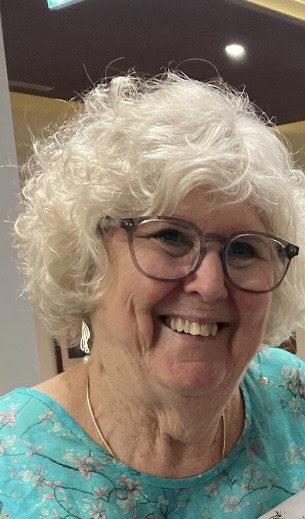

Helen served as Chair of our Management Committee from mid 2024 until February 2026. She remains a valued contributor to our committee and to our community education program. Helen’s decision in stepping down from the role of chair was driven by her need to free up more time to pursue her creative interests. She looks forward to ongoing involvement with the “positive and knowledgeable group of people” who make up the FoJB, all of whom are committed to ensuring Jirdarup Bushland continues to be a place where all existing living organisms thrive-one that may attract new species. Perhaps quenda will return.
We asked her some questions about her involvement with Jirdarup.
What has been your involvement with the Bushland so far?
I first became involved in the Friends of Jirdarup Bushland (FoJB) about 7 years ago helping with weekly summer watering of new plantings in the Etwell St entrance. This was followed by joining weeding and planting activities in the winter months. When the opportunity arose, I was keen to be involved in the management committee given 50 years of active interest in the natural environment. My experience of living in the hills on a ½ acre bush block followed by living on a 10-acre block in Albany where the bird species grew from 3 to 120 in 18 yrs due to creating the right environment for them really highlighted the importance of improving the environment so that the natural world can thrive. Involvement in the WA Naturalist club and other similar organisations also provided valuable and rich learning about the natural environment from highly knowledgeable and experienced people all of which I was able to share with the FoJB.
What makes the bushland special to you?
While the bushland is beautiful at any time of day it is especially magical in the evening or early morning light. It’s hard to believe this peaceful and restorative place is only 3 kms away as the raven flies from the bustle of the city. The bushland also provides a reminder to me that the natural world carries on doing what it does to some degree despite our best efforts to interfere with it. In Jirdarup, new birds keep flying in, fungi keep appearing, plants and trees keep flowering beautifully, colourful slime moulds brighten up burnt logs, and insects keep doing what they do. Its displays beauty at all times of the year. It’s also wonderful to see dugites and other reptiles in the bush – it’s their place.
A favourite place for me is on hands and knees when weeding. Here I can be immersed in the sounds of birds, observing the diverse life on the bushland floor, making new discoveries as well as seeing new emerging plants signalling the positive changes in the bush from one year to the next because of less weed competition. What’s not special about Jirdarup Bushland!
What are your favourite species of flora and fauna and why?
That’s a difficult question as I’m most in awe of how flora, fauna and fungi are so interdependent and equally vital in a healthy bushland. However, if I must choose, I think the little understood slime moulds are the often unseen and beautiful wonders of the bushland. They are fascinating organisms and make an important contribution to the ecosystem. After being involved in bird watching for over 50 years, I find all types of birds fascinating – there is so much we don’t know about them. How and why did the Red-capped Robins come to Jirdarup Bushland in 2025? Did they find what they were looking for? Will they come again? Is there a broadcasting system across bird species that says “come along and bring your mates – the water is flowing at the JIrdarup cockitroughs !” Even regularly watching the more common birds in our gardens can provide new fascinating insights into bird behaviours. From personal observations there is a definite hierarchy in the bird world as to who can drink when and in what order. I have yet to observe how this works in Jirdarup however it was ritualistic with our bird waterers in Albany.
The jarrah is one of my favourites given the ecosystem it supports, and its creamy white flowers are beautiful. Orchids are also a favourite – the deceit, mimicry and tricks they use to attract pollinators required for their survival is astonishing.