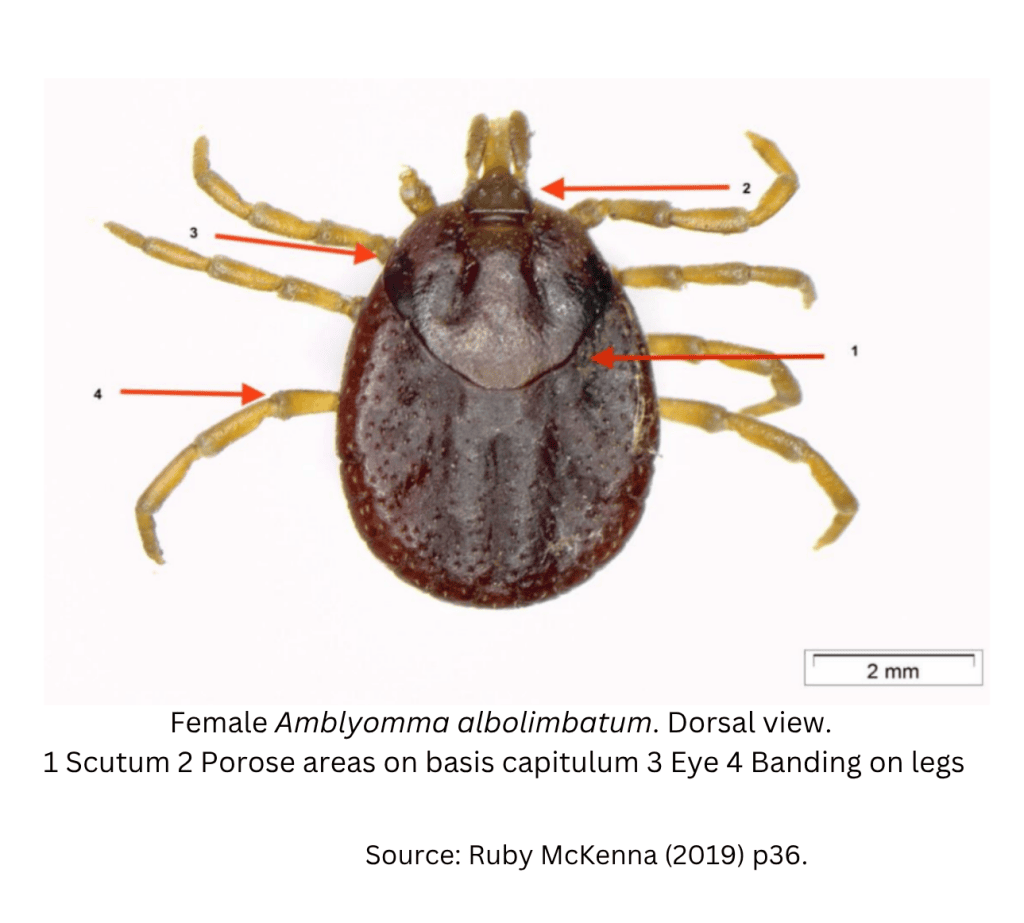

Meet Amblyomma albolimbatum – a species of tick living on our bobtails (yoorn in our local Whadjuk Noongar language).
In mid-2025, a Town of Victoria Park staff member noticed there were ticks on many of the bobtails – yoorn- in the Kensington Bushland. Fortunately for the bobtails, she was adept with tweezers and relieved many bobtails of this parasite. We contacted Kanyana Wildfire and Charlotte Oskam, Associate Professor of Biomedical Sciences at Murdoch University to learn more.
Advice from Kanyana Wildlife is:
If you can remove the ticks the bobtails will appreciate it! Especially the ones inside their ears; it’s difficult for the bobtails to get them off. If you find a bobtail with a large number of ticks (unusually large) it can be a sign that they are unwell, so it would be worth admitting them to a rehabilitation centre for a full health check.
A/Prof Charlotte Oskam’s Cryptick Laboratory at Murdoch University has been studying the health of bobtail lizards (also known as shingleback lizards) and the ticks that parasitise them. She was full of news and ideas about how the community might get involved.
Two recent honours students, Ruby McKenna and Samuel Elliot, discovered that these ticks can carry different bacteria, including some that might cause diseases in animals or people. For example, they found evidence of bacteria like Coxiella burnetii (which can cause Q fever), species of Rickettsia, and Francisella, some of which are known for causing diseases overseas. Their research used DNA tests to identify these bacteria and showed that ticks on bobtails could be more important for spreading pathogens than previously realised.
A potential new PhD student, Madison Harman, wants to take these findings further. Madison is focusing not just on bacteria but also on viruses – especially the so-called “bobtail flu,” a virus causing respiratory illness and sometimes death among Perth-area bobtails. Harman wants to understand which bobtails get sick and why, whether ticks might spread this virus, and if sick lizards are more likely to have lots of ticks or other parasites. The project will also look at how habitat, human influence, and city living affect lizard health and their parasite load, using modern tools to track their movements and genetics.
A special part of Harman’s work is a citizen science project. Local community members and wildlife carers will be able to help report sightings of sick or healthy bobtails, collect ticks, and share data from all around the city and suburbs. This will help researchers gather much more information than they could alone, making it easier to spot disease outbreaks early and protect both bobtails and the ecosystems they live in.
In summary, earlier research found that bobtail ticks carry potentially harmful bacteria, while Harman’s new work will explore how viruses, bacteria, and city life interact to affect lizard health, with help from the broader community to watch over these iconic lizards.
Charlotte also said that if people are taking ticks off the animals, it would be great if they could keep the ticks for them. She even sent a form so that your sample would be able to be best used.
Download a Tick Collection Form