
Context
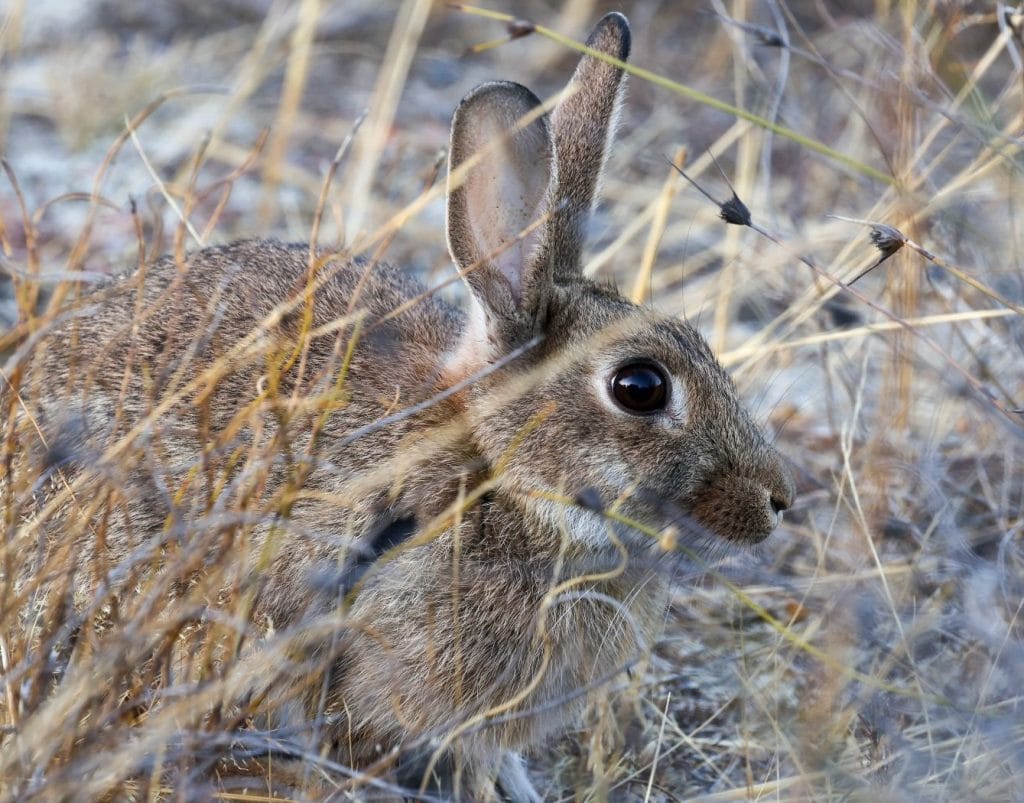
Rabbits continue to compete with native wildlife for food, contribute to soil erosion and subsequently desertification of the Australian environment, severely limit the regenerative ability of many plants and plant communities including endangered species and, in some cases, can support populations of introduced predators that also prey on native wildlife. In WA, they are declared pests of agriculture in both their domestic and feral forms under the Biosecurity and Agriculture Management (BAM) Act 2007. Landholders are required to control rabbits on their properties. The Town of Victoria Park is responsible for the control of rabbits in Jirdarup.
Throughout the weeding season of 2025, Friends of Jirdarup noted and reported significant rabbit activity in the Kensington Bushland.
The Town of Victoria Park commissioned Natural Area Consulting Management Services (Natural Areas) to undertake a survey of rabbit activity in the area in September 2025. This identified 14 active rabbit warrens and evidence of ongoing rabbit activity and associated impacts to native vegetation. Rabbit activity was also recorded within the adjoining Department of Primary Industries and Regional Development (DPIRD). Following this survey, an integrated rabbit control program using Rabbit Haemorrhagic Disease Virus (RHDV1-K5) was conducted in Kensington Bushland.
About RHDVI-K5
In Australia, no variant of RHDV1 K5 has ever been found to cause infection in any other animal except the European rabbit, (Oryctolagus cuniculus) therefore there is no risk of this virus spread to other animals or pets.
The virus has been released by a licenced operator that RHDV1 K5 baits under the environmental conditions and timeframe that allows only rabbits to consume the baits.
This website provides answers to common questions about RHDVI-K5 virus: Frequently asked questions about RHDV1 K5 – PestSmart.
The following site provides information for people in Western Australia who have pet rabbits. Precautions for owners of pet rabbits. In Queensland, it is illegal to keep a pet rabbit, with fines up to $80,000.
Summary report of 2025-2026 rabbit control program
The information below is a summary of the report: Rabbit control in Kensington Bushland to the Town of Victoria Park, prepared by Natural Area Consulting Management Services (Natural Areas), 29 May 2026.
Between November 2025 and May 2026, the following actions were carried out:
- manual destruction of rabbit warrens
- release of Rabbit Haemorrhagic Disease Virus (RHDV1-K5)
- four-night rabbit cage trapping program.
results
Destruction of warrens
Fourteen (14) rabbit warrens were destroyed on 13 November 2025. Shovels and breaker bars were used to excavate and collapse accessible burrow entrances and associated tunnel systems by breaking tunnel roofs and chamber walls. Excavated material was then backfilled and compacted to minimise the likelihood of burrow re-establishment and site recolonisation by rabbits.
Release of Virus
The virus was released over a 3-night free-feeding period between 7-10 April 2026 followed by release of virus-treated bait on 10 April 2026. The program used a combination of furrowed trail baiting along high use, rabbit travel pathways proximal to known rabbit warrens, areas of harbourage, and broadcast baiting where rabbit diggings and accumulated dung pile observations were highest.
Cage trapping
Over a 4-night period from 11-15 May 2026, 20 cage traps were deployed. Cage traps were inspected twice daily, within 3 hours of sunrise. They were closed following morning inspections to minimise diurnal, off-target capture of birds/reptiles and re-set and re-baited with fresh bait in the afternoon. Traps were deployed throughout areas of recorded rabbit activity, including active warrens, harbourage sites, rabbit travel corridors, and locations with high levels of digging and accumulated dung piles.
No rabbits were captured however Quenda (Isoodon fusciventer) were found in eight traps. They were all inspected for injury and soft-released at the site of capture. Two were photographed on 14 May and four on 15 May indicating that there were at least four Quenda in the bushland.
Discussion and recommendations
- Warren destruction is usually done after population suppression. Doing it early gave an immediate response to the rabbit activity in the bushland reducing available warrens and shelter.
- No rabbit carcasses were observed during post-release inspection and during the cage trapping program, suggesting mortality likely occurred within warrens, which may have limited opportunities for secondary transmission and reduced detectability in the field.
- Estimated bait uptake of approximately 40% suggests a relatively low-density rabbit population at the time of release of the virus. While this confirms exposure to the virus, uptake levels were below those generally associated with higher transmission efficiency.
- The capture of Quenda during trapping reinforces the need to carefully consider control method selection to minimise off-target impacts. This is particularly relevant where pindone baiting is considered, due to the risk of primary and secondary poisoning to native species.
- Despite reduced activity within the reserve following control actions, reinvasion pressure from adjoining DPIRD managed land remains a key constraint to long term suppression. Without coordinated landscape-scale management between neighbouring land managers, reinvasion into treated areas is likely over time.
- Logistical constraints associated with RHDV1-K5 procurement, including lead times between ordering and delivery, highlight the need for forward planning to align releases with optimal seasonal conditions. Because viral effectiveness is highly dependent on seasonal conditions and rabbit life cycle stages, delays in availability can reduce program efficiency or result in releases occurring outside optimal conditions.
- Biannual surveys are recommended in autumn (March – April) and spring (September – October) to assess warren status, rabbit activity, and vegetation impacts, with additional inspections following favourable breeding or rainfall conditions. RHDV1-K5 releases should be undertaken no more than annually, ideally in autumn to early winter (March – April), and only when monitoring indicates sufficient rabbit activity and when rabbit kittens are absent, to support effective transmission and mitigate the introduction of viral immunity.
- Cage trapping should be used as a targeted follow up control following viral release, typically 4 weeks post-release, and undertaken 1 – 2 times per year where residual activity persists. All known warrens should be reassessed during each survey cycle, with any re-excavation or new harbourage promptly treated.