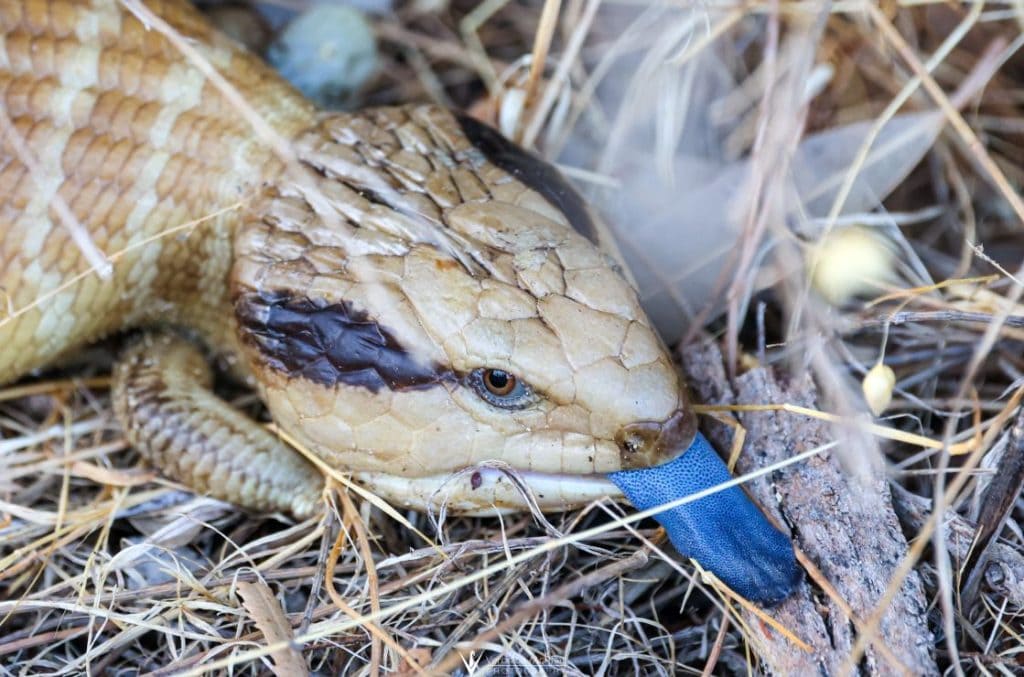

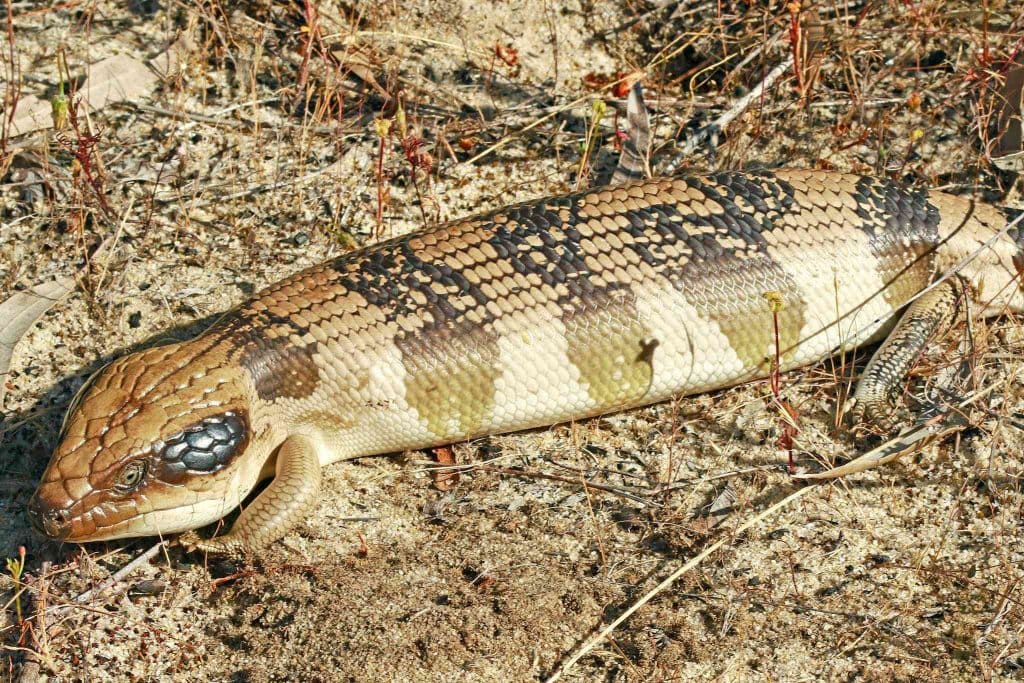
Western blue-tongue Skink
Tiliqua occipitalis
Whadjuk Noongar: Dilyert
We don’t see them very often in Jirdarup. Our first record of a blue-tongue was by the late Andrew Thomson in 2000. Reptile surveys from 2017 to 2024 (provided by Robert Audcent) found only one in October 2019. This compares with 30 bobtails (Tiliqua rugosa) over the same period.
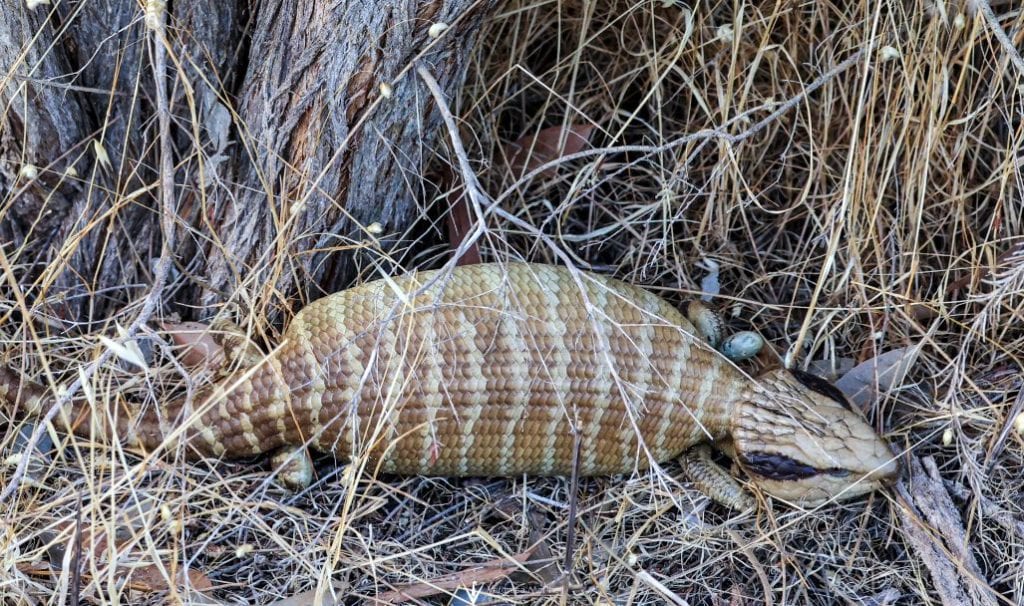
On 26 February at 7.00am, Veronica McPhail photographed what appeared to be a very pregnant blue-tongue lizard on the path coming in from Baron-Hay Court. Closer inspection revealed this was not a local but a Centralian Blue-tongue (Tiliqua multifasciata) that lives in semi-arid to arid red sand plains, sand dunes with spinifex open scrub and desert environments of central and northern Australia.
Herpetologists were quick to advise us that she most certainly must have been released in the area and wondered whether they had a male, or if there’s a male around somewhere, or whether she’s become parthenogenic (through lack of males) as some Australian reptiles are! They had not heard this for blue-tongue lizards though. Or perhaps she is just very fat!
Given so few previous sightings, our experts also suggested that perhaps they too were released blue-tongues and perhaps there are none living in Jirdarup at all. A question for future ecologists and herpetologists to investigate.
Read about them on the Perth Zoo website.
.