
Invertebrates, animals without backbones, make up more than 90% of the species in the animal world. Although there is no comprehensive list of all the invertebrates in Jirdarup, several studies of the insects, spiders and worms have been undertaken and avid visitors regularly share their sightings and photos.
During 2026, Dr Kit Prendergast will be surveying the native bees in Kensington Bushland in summer and spring. Her results will be part of a presentation by her in November 2026. Details will be published as they become available.
Volunteer contributions
Volunteer contributions to our knowledge about the invertebrates living in our urban bushland continue to grow.
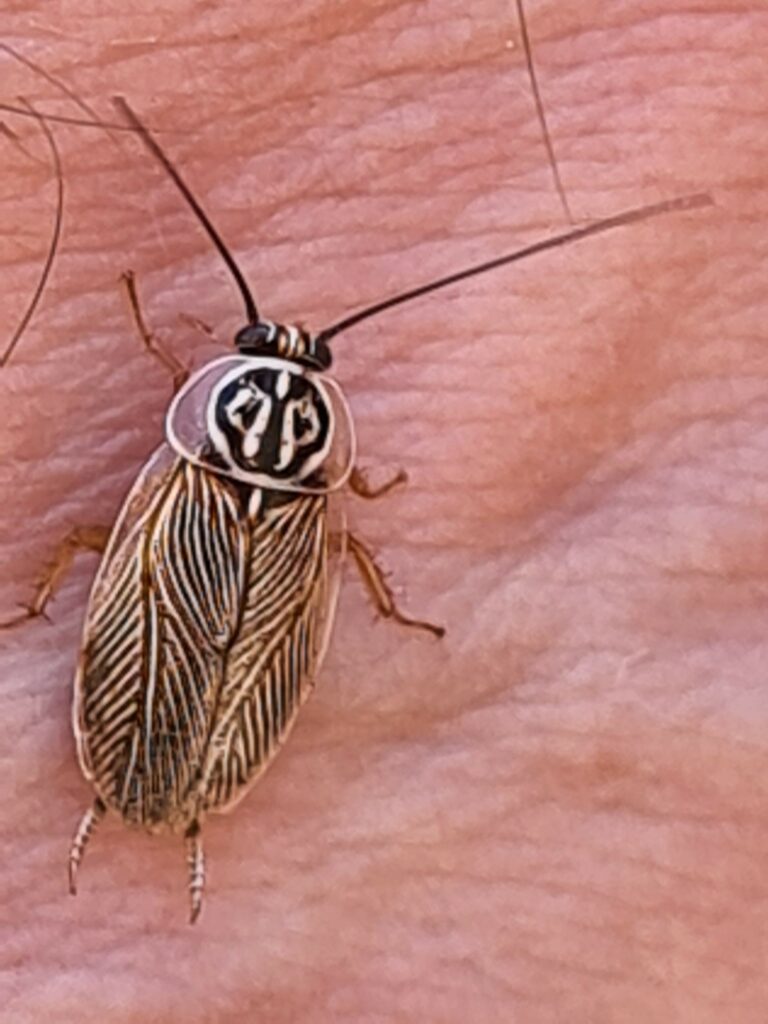

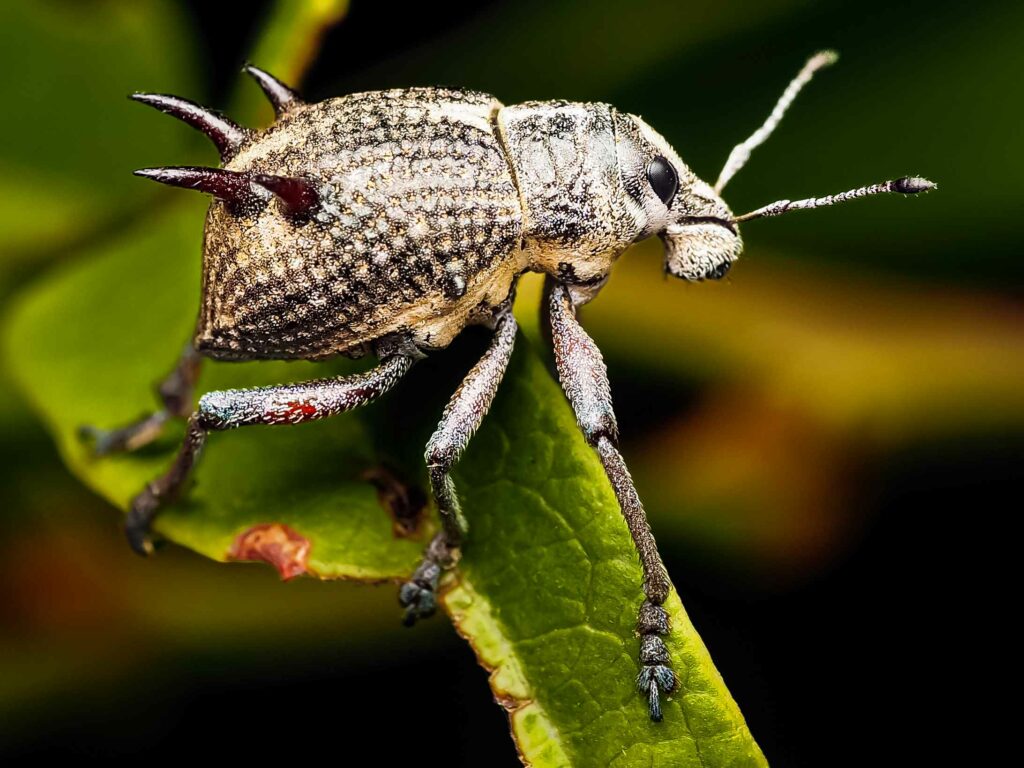
We want to collect your short article on your favourite invertebrate.
Studies of invertebrates in the area
- Surveys of butterflies and day-flying moths were conducted by Matthew Williams in remnant bushland in the Swan Coastal Plain between 2001 and 2005.[i] Both Kensington and Hill View were included in the 46 sites surveyed. Only two resident species were found: the Double-spotted Line Blue butterfly (Nacaduba biocellata) and a day-flying moth (Pollanisus cuprea). Three non-resident butterflies were identified in Kensington, the Meadow Argus (Junonia villida), the Australian Painted Lady (Vanessa kershawi) and the introduced White Cabbage Butterfly (Pieris rapae).
- Robert Lavigne identified a potential new species of robber fly in 2011.[ii] This species has a limited known distribution in Western Australia, having been collected only in remnant Banksia bushland in Kensington Bushland and in openEucalypt woodland near Mundaring.
- An investigation of the survival of mygalomorph (ground dwelling/burrowing) spiders following fire was published in 2019 by Mason et al.[iii] Survival was monitored for a year following high-intensity and low-intensity fires in Banksia woodland remnants in urban Perth including Kensington Bushland. Of the 257 burrows found, fewer than half (45%) the spiders were confirmed to survive initially after intense wildfire, but none were confirmed alive after 12 months. Only one spider from 103 observed was confirmed dead after low-intensity prescribed fire.
- An unpublished study by Marc Midmer of the then Department of Agriculture identified at least 34 species of native ant in the bush area in 1994, all of them native except one. The most common were Dolichoderus ypsilon, Doleromyrma sp. 9, Melophorous sp.1 and Podomyrma sp.2.[iv]
- A further study examining the distribution of earthworms on the Swan Coastal Plain did not specifically sample Kensington Bushland but its observations are relevant: Bush Forever sites are likely to support at least one native earthworm species but often have introduced worms due to the dumping of garden waste (Abbott and Wills).[v]
[i] Williams, MR (2009) Butterflies and day-flying moths in a fragmented urban landscape, south-west Western Australia. Pacific Conservation Biology Vol 15: 32-46.
[ii] Lavigne, Robert (2011) A new species of Asilidae (Insecta: Diptera) from Western Australia. The South Australian Naturalist, 85(1) 14-20.
[iii] Mason, L, Bateman, PW, Miller, BP & Wardell-Johnson GW (2019) Ashes to Ashes: Intense fires extinguish populations of urban short-range endemics. Austral Ecology, 44, 514-522.
[iv] Widmer, Marc. Senior Technical Officer, Invasive Species and Environmental Biosecurity, Department of Primary Industry and Regional Development. Personal communication 5 January 2023.
[v] Abbott, I &A Wills (2002) Distribution of the Native Earthworm Fauna of the Perth Metropolitan Sector of the Swan Coastal Plain. Pacific Conservation Biology 8(3) p196-210.